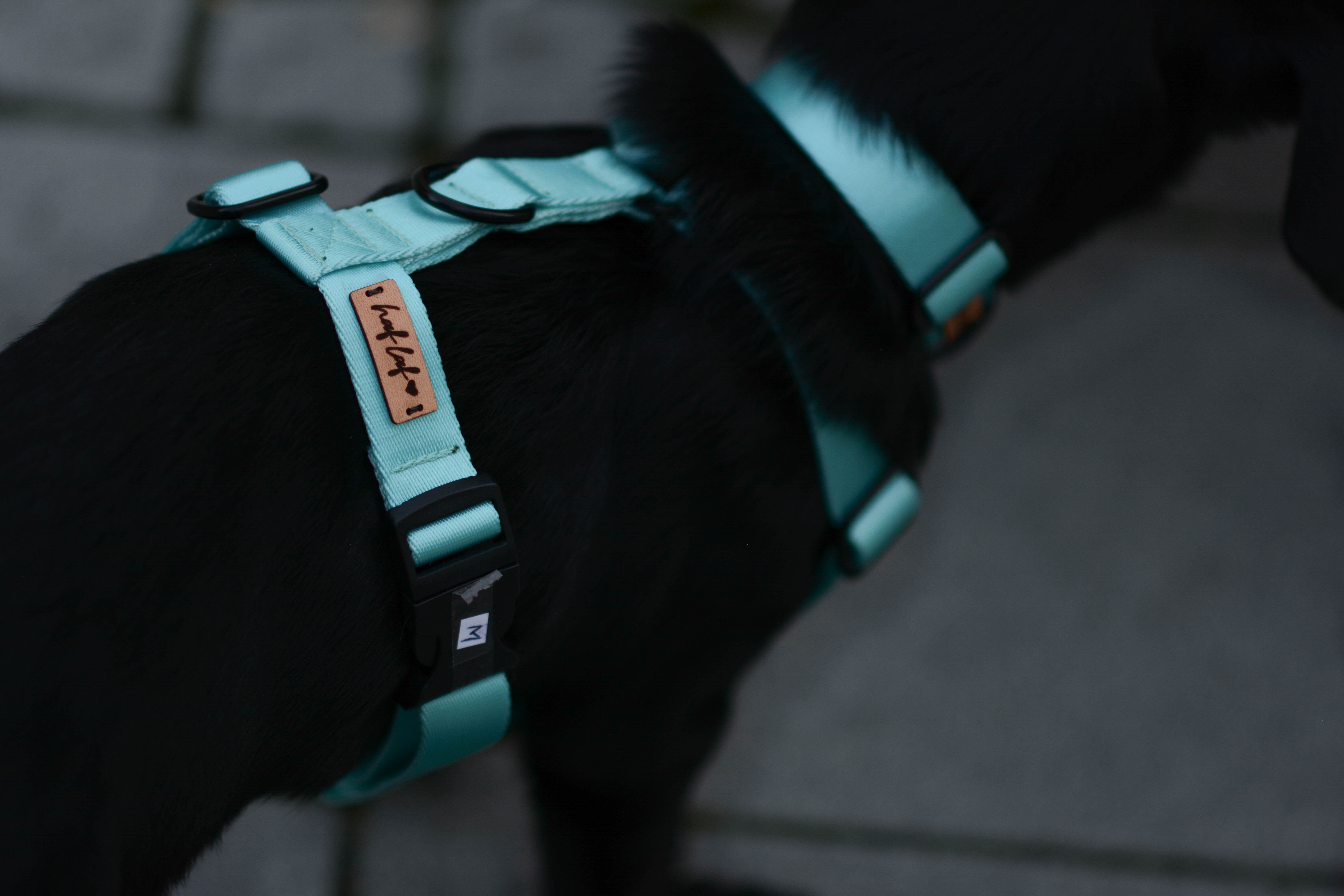
How to measure your dog for a harness
10. September
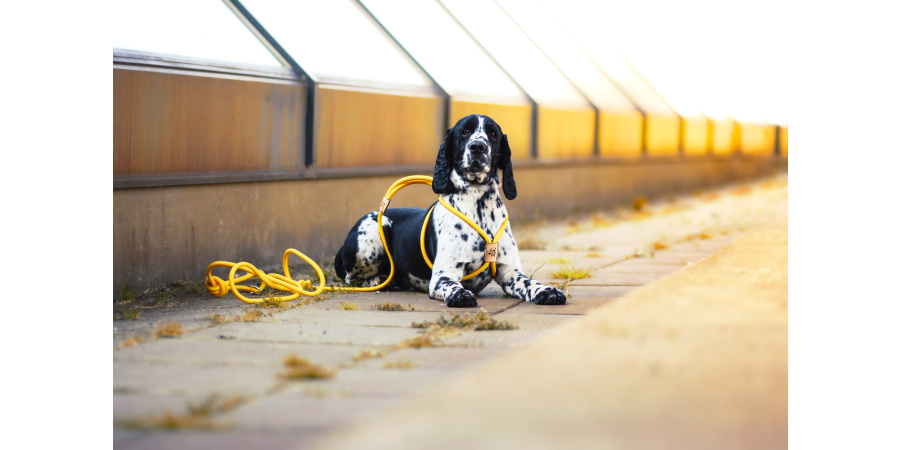
Choosing the right harness size is not difficult, but one rule really matters: never choose based solely on your dog's weight or breed. Two dogs of the same breed may have different builds, different chest widths or different levels of muscle development. That is why you should always use your dog's actual measurements when choosing a harness. All you need is a soft measuring tape, a few minutes and a dog who will stand still for a little while.
Why isn't your dog's weight enough?
You may have come across size guides that say things like “Size S is for dogs weighing up to 10 kg.” These figures are only a rough guide, though. Take a French Bulldog and a Whippet, for example. Both may weigh around 12 kilograms, yet their body shapes are completely different. A French Bulldog has a broad chest and a thick neck, while a Whippet is slim with a deep chest. The same harness will therefore fit them differently. Even two dogs of the same breed can vary in this way. One may be slimmer, while the other is more muscular. That is why we always recommend measuring rather than guessing.
What will you need?
A soft measuring tape is the best tool for the job. If you do not have one at home, you can use a piece of string and then measure its length with a ruler or tape measure. Measure your dog while they are standing on a level surface. If they are sitting or lying down, the measurements may be inaccurate.
Which measurements matter?
To choose the right harness, you will usually need two basic measurements: neck circumference and chest circumference.
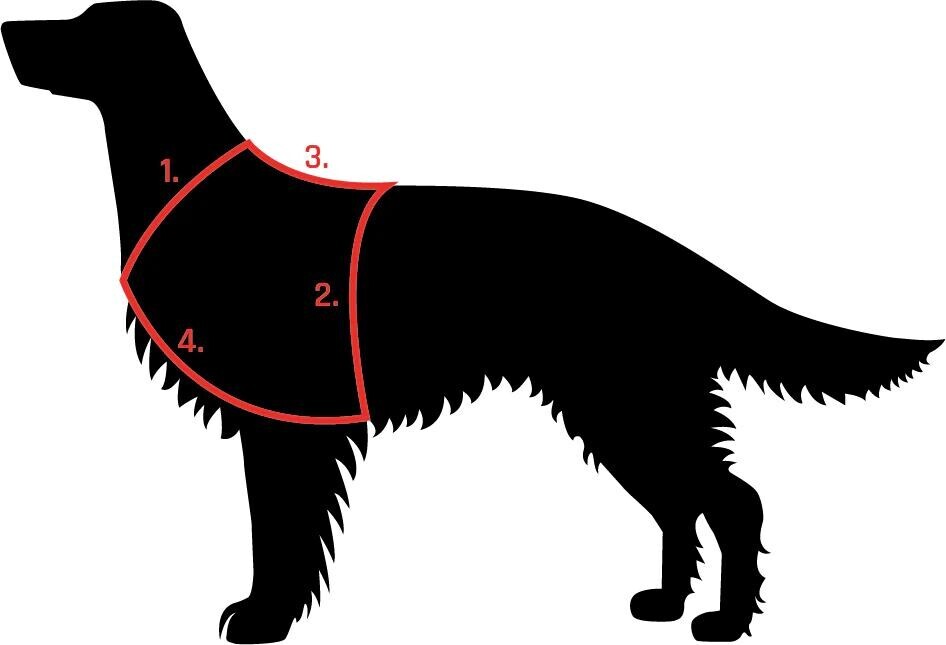
Neck circumference: Measure around the area where the upper part of the harness will sit. This is not where your dog normally wears a collar, but lower down at the base of the neck, near the shoulders. The tape should sit snugly against the body without being tight or constricting.
Chest circumference: Chest circumference is the most important measurement when choosing a harness. Measure around the widest part of the chest, just behind the front legs. Keep the tape level as you pass it around the body, making sure it is neither too tight nor too loose. This is the measurement most commonly used to determine the right harness size.
How to read a size chart
Every manufacturer uses its own designs and measurements. A size M from one brand may therefore differ from a size M from another. Always compare your dog's measurements with the size chart for the specific product. If your dog falls between two sizes, we recommend considering their build as well. A smaller size often suits slimmer dogs better, while more muscular dogs may need the larger option.
| Size | 1 | 2 | 3 | 4 | Strap widht | Example breeds |
| XS | 20 - 34 cm | 23 - 46 cm | 8 cm | 10 - 15 cm | 15 mm | Chihuahua, Yorkshire Terrier, Toy Poodle |
| S | 28 - 40 cm | 39 - 54 cm | 10 cm | 12 - 18 cm | 25 mm | Jack Russell Terrier, Dachshund, Fox Terrier |
| M | 34 - 51 cm | 50 - 74 cm | 12 cm | 15 - 22 cm | 25 - 40 mm | Staffordshire Bull Terrier, terrier, Beagle, Corgi |
| L | 45 - 65 cm | 57 - 84 cm | 14 cm | 20 - 30 cm | 25 - 40 mm | Pointing breeds, Samoyed, Kelpie |
| XL | 59 - 75 cm | 80 - 94 cm | 18 cm | 29 - 40 cm | 40 mm | Molosser breeds (Great Dane, Fila Brasileiro, Mastiff, Tosa Inu) |
The most common mistakes when measuring your dog
One of the most common mistakes is measuring an old harness instead of the dog. Older equipment can stretch with use and may no longer match its original dimensions.
Another common mistake is measuring over a winter coat or thick fur. If your dog has a particularly thick coat, we recommend gently pressing the tape into the fur so that the measurement reflects the actual circumference of the body.
Some owners also leave too much extra room, assuming their dog will “grow into” the harness. The result is often a harness that twists or slips as the dog walks.
How can you tell if a harness fits properly?
A well-fitting harness should not restrict your dog's movement. Once fitted, it should:
- sit snugly against the body,
- stay in position without twisting during walks,
- avoid pressing or rubbing behind the front legs,
- allow the shoulder blades to move freely,
- stay in place even when your dog runs.
You should be able to fit approximately two fingers between the harness and your dog's body. If there is significantly more room, the harness is probably too loose. If it feels constricting or restricts your dog's movement, it is too small.